

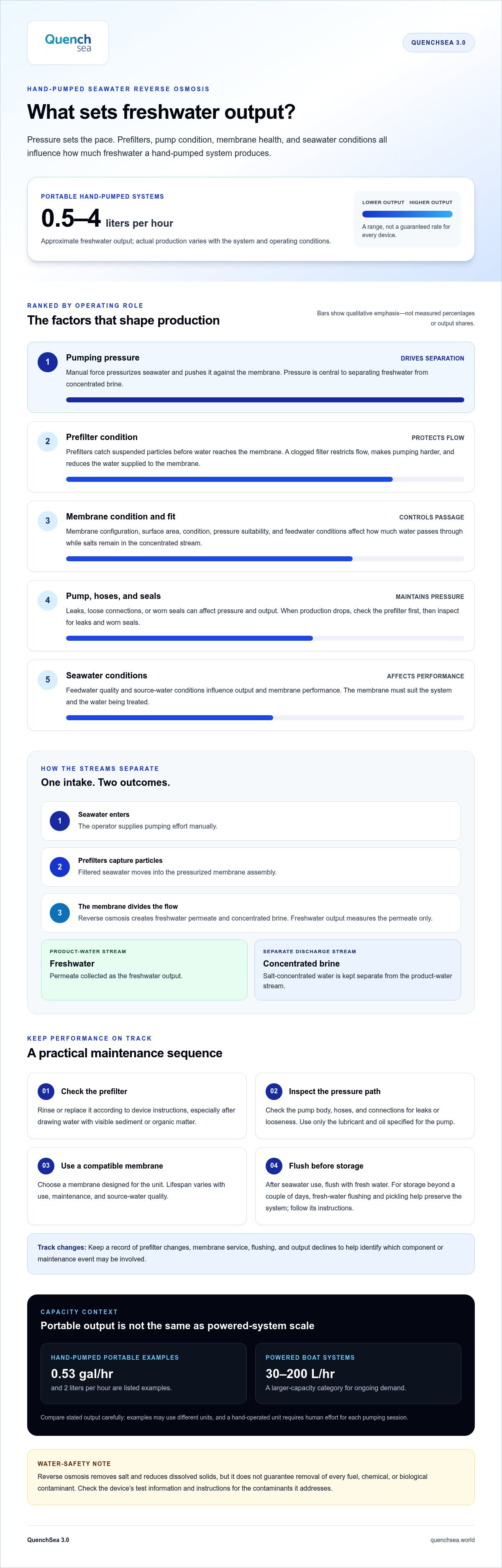
A hand pump can turn ocean water into freshwater, but pressure, not portability alone, sets the pace. Portable reverse osmosis hand pumps for ocean water produce roughly 0.5 to 4 liters of freshwater per hour, depending on the system and operating conditions. The pump forces seawater against a membrane, which separates much of the salt from the water.
That output range is useful, but it is only part of the picture. Pumping pressure, prefiltration, and membrane condition all affect production, especially when you are operating without power. This article explains how hand-pumped seawater reverse osmosis works, what influences freshwater output, and how the pump, prefilters, and membrane affect performance. You will also learn how to maintain these components so the system is ready when freshwater is hard to reach.
Key Takeaways
- Portable hand-pumped desalination devices produce roughly 0.5 to 4 liters of freshwater per hour. Actual output depends on pressure, seawater conditions, and equipment condition.
- Understand how prefiltration protects the membrane, and how pump and membrane upkeep can affect performance over time.
- Separate freshwater production from brine discharge: reverse osmosis sends concentrated saltwater away from the product-water stream.
- Pressure drives salt separation across the membrane, so the pump and connected components play a central role in system operation.
- Compare portable seawater devices by their operating method and stated output, then match the system to your freshwater needs and use conditions.
Is there a portable desalination device?
Yes. A hand-pumped reverse osmosis unit can desalinate seawater without a powered pump. A portable reverse osmosis hand pump for ocean water uses manual force to produce freshwater, with output affected by pressure, membrane condition, and feedwater quality.
For emergency use, compare how the pump creates pressure, its stated output, and the maintenance it needs. Fixed systems require a different assessment, including installation space and seawater intake.
How Hand-Pumped Reverse Osmosis Works
Hand-pumped reverse osmosis uses manual force to pressurize seawater and push it through a semipermeable membrane. The membrane separates freshwater from concentrated brine. The operator supplies the pumping effort directly, rather than relying on electricity or fuel.
In a typical process, seawater first passes through prefilters that capture particles, then enters the pressurized membrane assembly. The membrane produces two streams: freshwater and brine. Listed examples include systems producing 0.53 gallons per hour and 2 liters per hour. Compare stated units carefully before judging capacity.
Portable Device Options and Comparisons
Portable seawater desalination devices range from hand-operated emergency units to powered marine systems. Their weight depends on the pump, pressure vessel, membrane, and frame. A compact manual design can suit emergency equipment that needs to be carried, while a larger kit may need more storage space.
When comparing a portable reverse osmosis hand pump for ocean water, consider stated freshwater output alongside the complete system’s weight and included components. Listed examples range from 0.53 gallons per hour to 2 liters per hour. Product prices vary by system and configuration, so assess what the complete package includes rather than judging one component alone.
Output Capacity and System Scale
Portable capacity describes freshwater production over time, while marine and residential systems serve larger, ongoing demand. A hand-operated unit can support an emergency or off-grid need, but it requires human effort for each pumping session. Powered boat systems produce 30 to 200 liters per hour.
Small-scale fixed desalination requires space for equipment, seawater intake, brine discharge, and access for installation. Residential planning therefore differs from choosing a portable device for a raft or yacht.
Emergency Use and Water Safety
Hand-operated seawater desalination can provide freshwater without power or fuel, but production depends on pumping effort and system condition. Before relying on a unit, understand its stated output and maintain its intake, prefilters, and membrane.
When assessing a portable reverse osmosis hand pump for ocean water, review the test information and instructions for the contaminants it addresses. Reverse osmosis removes salt and reduces dissolved solids, but it does not guarantee removal of every fuel, chemical, or biological contaminant. Membrane performance depends on the contaminant and system design.
Prefilter, pump, oil, and membrane maintenance
Maintenance protects the components that control flow and salt removal: the prefilter, pump, seals, and reverse osmosis membrane. Their condition affects system capacity and freshwater output. A simple routine can reveal clogging, leaks, or declining production before they interrupt use.
Keep the Prefilter and Pump Clear
The prefilter catches suspended particles before seawater reaches the membrane. Rinse or replace it according to the device instructions, especially after drawing water with visible sediment or organic matter. A clogged filter restricts flow and makes pumping harder, reducing the water supplied to the membrane.
During routine checks, inspect the pump body, hoses, and connections for leaks or looseness. If pressure or output falls, check the prefilter first, then look for leaks and worn seals. Pump seals may need replacement as performance declines. Use only the lubricant and oil specified for the pump, and follow its maintenance instructions.
Protect the Membrane and Capacity
A seawater membrane must suit the system’s pressure and feedwater conditions. Its configuration, surface area, and condition affect how much water passes through while salts remain in the concentrated stream. Use a membrane designed for the unit, since an incompatible membrane can disrupt performance and capacity.
Membrane lifespan varies with use, maintenance, and source-water quality. Well-maintained fixed small-scale systems can keep their membranes for 5 years or more. These lifespans are not interchangeable: portable units face different use patterns and maintenance conditions than fixed installations.
Flush Before Storage
After operating in seawater, flush the watermaker with fresh water to clear residual salt from its flow paths. For storage beyond a couple of days, fresh-water flushing and pickling help preserve the system. Follow the unit’s instructions for flushing and pickling, because membrane materials and procedures vary.
Keep a simple maintenance record of prefilter changes, membrane service, flushing, and any decline in output. This helps connect a change in production to a particular component or maintenance event. For example, if output drops after a long storage period, check the flushing routine and system condition before assuming the membrane has failed.
For a hand-powered approach to seawater desalination, explore portable desalination design and how its components work together.
Freshwater production and brine discharge
Reverse osmosis divides feedwater into two streams: freshwater permeate and concentrated brine. The freshwater rate measures only the permeate, not all the seawater entering the system.
To understand a watermaker’s actual output, compare its stated production rate with its operating conditions and intended use. Brine handling matters too, because the rejected stream carries concentrated salts away from the membrane.
Freshwater Rate Depends on System Scale
Compact electric desalination systems for boats and recreation produce 30 to 200 liters of freshwater per hour. That capacity serves a different need from a manually pumped emergency unit, where output depends on the device and sustained operator effort. Compare systems using the same unit and time period, such as liters per hour, rather than relying on a broad label like “high output.”
Small community and commercial systems are described as producing 5,000 to 100,000 liters per day. Their daily output reflects a larger installation and a different operating scale. A marine system may serve a vessel’s ongoing demand, while a portable device provides a smaller stream for remote use. Those figures aren’t directly comparable without accounting for the different time periods and applications.
Where the Brine Goes
As the membrane separates water, it retains much of the dissolved salt in the reject stream. This stream, called brine or concentrate, exits through a separate outlet. Keep the brine outlet separate from the freshwater collection line; mixing the streams defeats the separation process.
For a portable setup, position the discharge so brine flows away from the seawater intake and freshwater container. This helps prevent concentrated reject water from re-entering the feed or contaminating collected permeate. Follow the unit’s flow-path design, since outlet placement varies between systems.
Manufacturing, Configuration, and Returns
Manufacturing tolerances affect how components fit together, including seals, hoses, and membrane housings. A poor connection can leak or interrupt pressure, changing the flow through the system. Before first use, inspect each connection and follow the device’s assembly sequence. Keep packaging and purchase records in case a manufacturing defect requires a return.
Return terms depend on the seller and reason for return; they do not indicate freshwater performance. Keep the order confirmation, document any defect, and avoid modifying the unit before recording the issue. To assess output, measure the collected freshwater over a consistent operating period and keep the brine outlet clear. This gives you a practical baseline for spotting changes in production.
Pressure supply and reverse osmosis components
Pressure pushes seawater through the reverse osmosis membrane while salts remain in the reject stream. In a hand-powered system, every component must work together to sustain that separation.
Pressure Supply
Pressure is the force that pushes seawater against the membrane. Without it, the membrane cannot separate salts. A hand pump builds pressure through repeated strokes, moving feedwater from the intake toward the membrane housing.
Follow the flow path: seawater enters the intake, passes through prefiltration, then reaches the pump and membrane. Valves control direction, while seals help contain pressure. A loose connection or worn seal can leak, reducing pressure at the membrane and affecting freshwater flow.
Pressure is not simply a measure of effort. The system must overcome seawater’s natural osmotic pressure and maintain enough force for water to pass through the membrane. If pumping becomes harder or the output changes, inspect the intake, prefilter, hose connections, and seals in that order.
Operate the pump as designed. Avoid blocking the intake or kinking a hose, as either can restrict feedwater before it reaches the pressure chamber. Smooth, consistent strokes help maintain flow. Follow the device instructions for operating pressure and handling rather than applying settings from another watermaker.
Reverse Osmosis Components
A reverse osmosis assembly includes a feedwater path, prefilter, pressure pump, membrane housing, freshwater outlet, and brine outlet. Each component has a distinct role, so understanding the sequence helps identify where a fault may interrupt production.
The prefilter catches particles before they reach the membrane. The pump then drives filtered seawater into the membrane housing. Water that passes through the membrane exits through the freshwater line; concentrated brine leaves through a separate discharge. Keep both outlets clear and correctly routed to prevent flow problems.
Membrane condition affects salt separation. Fouling or damage can reduce performance, while a restricted prefilter may limit the water supplied to the membrane. If freshwater flow falls, check the prefilter and connections before assuming the membrane needs replacement. Salt passing into the freshwater stream can also indicate that the membrane or its seals need attention.
Check components in sequence: confirm intake flow, inspect the prefilter, examine hoses and seals, then assess both outlet streams. This helps distinguish upstream restrictions from membrane or discharge problems. A portable reverse osmosis unit depends on the entire pressure path, not just the pump. Regular inspection makes faults easier to diagnose.
What portable hand-pump reverse osmosis desalination devices are available for seawater?
Portable seawater desalination options include hand-operated emergency units, compact kits, and powered marine systems. Choose based on how you will carry, operate, and maintain the device, not on its “portable” label alone.
Handheld and backpack-sized survival devices use manual pumping, while compact marine systems use electric power. A seawater reverse osmosis kit may include a pump, membrane housing, prefilters, and separate freshwater and brine outlets. The configuration determines setup and operation, so compare complete systems rather than individual components.
- Hand-operated units: Use human effort to pressurize seawater. They suit situations where access to electricity, batteries, or fuel is limited.
- Portable kits: Package reverse-osmosis components for seawater treatment. Check how the pump, membrane, prefilters, hoses, and outlets fit together.
- Powered marine systems: Use an electric pump and are designed for boat or recreation use. They require a power source, unlike manual units.
Output claims also differ by configuration. Listed manual systems include one stated at 0.53 gallons per hour, while a seawater reverse-osmosis kit is listed at 2 liters per hour. Some kits advertise at least 97% desalination. These figures describe different claims and units, so don’t treat them as directly comparable performance tests. Check whether the stated figure describes freshwater production, salt reduction, or another measure.
Weight matters most when you need to carry the system or store it in emergency equipment. A compact device may be easier to transport, while a larger kit can include more components and need more setup space. Compare the packed system, including hoses and accessories, rather than judging the pump alone. For a boat installation, consider where the intake, freshwater collection, and brine discharge will go.
Before choosing, match the device to the water source and operating conditions. Confirm that it is designed for seawater, then consider the pumping effort, storage space, and maintenance access available. A manual system depends on the operator; a powered marine unit depends on its electrical supply. Prefilters and membranes also need care, so weigh maintenance needs alongside stated output.
For a hand-powered option designed to desalinate seawater, explore a portable desalination device and its operating approach.
QuenchSea: QuenchSea 3.0 Desalination Device
QuenchSea 3.0 Desalination Device is a hand-powered seawater desalination option for marine safety, emergency preparedness, and off-grid coastal use. It uses manual pressure and reverse osmosis to remove salt and reduce dissolved solids, producing drinking water without electricity, batteries, or fuel.
In ideal conditions, it can produce 3 litres of water per hour. That makes it relevant when you need a portable freshwater source and can operate a manual pump. As with any desalination system, output depends on operating conditions and component care, so understand its maintenance needs as part of your preparation.
For details on the device, visit quenchsea.world.
Make Your Water Plan Ready for the Real World
Choosing a portable reverse osmosis hand pump for ocean water is one part of a wider readiness plan. Decide where you will use it, who will operate it, and how you will store and maintain it between uses. A clear plan helps make the equipment part of your routine rather than leaving its operation until an emergency.
Consider the setting before you need freshwater: a yacht, life raft, emergency kit, or off-grid coastal location each brings different practical constraints. Think about seawater access, equipment space, and how you will collect and manage the water. Then choose a solution that fits your preparation and operating needs.
QuenchSea offers the QuenchSea 3.0 Desalination Device for people considering hand-powered seawater desalination. To discuss whether it fits your preparedness needs, contact QuenchSea about desalination. Take the next step with a plan you can put into practice, and build confidence through preparation.
Frequently Asked Questions
What sizes and output ranges are available in small desalination units?
Small desalination options range from handheld or backpack-sized devices to fixed community systems. Portable survival units produce roughly 0.5 to 4 liters of freshwater per hour. Compact electric boat systems produce 30 to 200 liters per hour, while small community and commercial installations are described at 5,000 to 100,000 liters per day. These scales serve different needs, so compare production units and intended use.
Which manual reverse osmosis watermakers are suitable for ocean water and how do they work?
Choose a manual watermaker designed specifically for seawater, such as QuenchSea 3.0. Its hand lever supplies pressure, and its reverse osmosis membrane separates freshwater from concentrated brine. Prefilters protect the membrane by reducing particles in the incoming water. The operator must keep pumping, so consider the physical effort and intended emergency or marine use. Follow the device’s setup and maintenance instructions for its particular components.
How much freshwater can a portable hand-pump seawater desalination unit produce per hour?
Portable hand-pumped units can produce different amounts of freshwater, and output depends on the unit and operating conditions. Its actual output may be lower with colder or saltier water, and it requires continued lever operation. Feedwater must not exceed 45°C (113°F). Plan around the unit’s stated capacity and conditions rather than treating a maximum rate as a constant supply.
What salt rejection rate and drinking-water quality do portable hand-pump RO units achieve?
Performance varies by unit: a listed seawater RO kit advertises at least 97% desalination, while QuenchSea 3.0 is designed to keep output below 1,000 ppm TDS, with typical output of 400-500 ppm in suitable conditions. Test output with a TDS meter or supplied pen; drink only when the reading is below 1,000 ppm. Do not assume filtered water is safe based on appearance alone - test a small amount first, and only drink when TDS reading is below 1 000 ppm.
How much do portable hand-pump reverse osmosis watermakers cost in the US?
In the US, prices depend on the selected configuration and what it includes, such as a fitted membrane, prefilters, spare parts, or a TDS meter. Compare complete equipment packages rather than a pump or membrane alone. Also consider whether you need compatible spares and the maintenance items required for your intended use. This gives you a more useful basis for comparing overall value than focusing on a single component.
How do you operate and maintain a hand-pump reverse osmosis watermaker?
Set up the intake, freshwater collection, and brine discharge as the device instructions show, then operate its hand lever and keep both outlets clear. After use, flush and store the unit as directed. Inspect prefilters, hoses, seals, and the membrane for restrictions or wear. Test output with a TDS meter or supplied pen, and drink only when the reading is below 1,000 ppm.
What are the risks and limitations of using a portable hand-pump desalinator in an emergency?
A hand pump needs sustained human effort, and output can fall with cold or saltier feedwater. A portable unit also depends on maintained filters, seals, and membrane condition; it cannot supply the volume of a large fixed system. TDS testing is essential, and appearance alone doesn’t establish drinking safety. If the water tastes salty or unusual, do not drink it. Test output and drink only below 1,000 ppm TDS.
How do leading manual seawater desalination pumps compare in weight, output, and price?
QuenchSea weighs less than a kilogram and can produce 3 liters per hour in ideal conditions. Other listed manual systems produce 0.53 gallons or 2 liters per hour.